
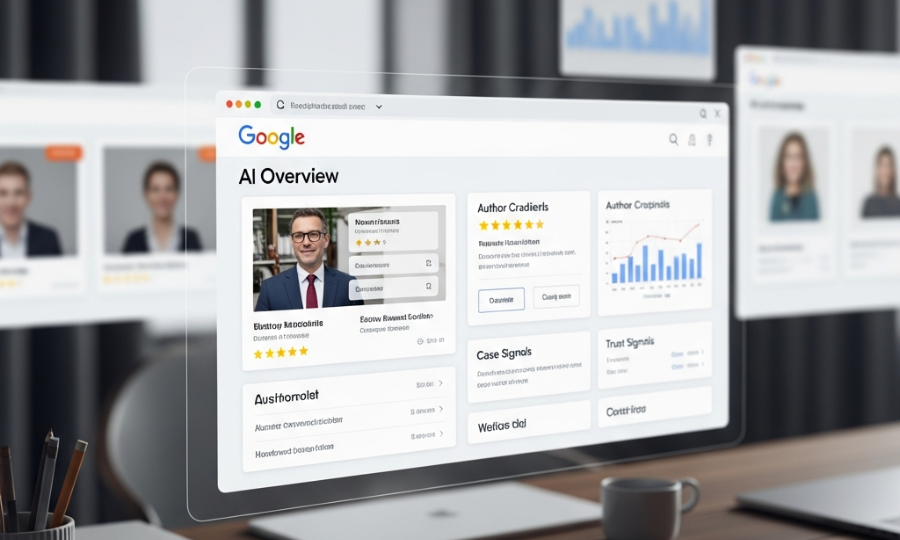
Your phone rings at 9:47 PM. It’s a high-value lead, but your team is offline. That missed call isn’t just an inconvenience; it’s lost revenue. In today’s AI-driven search landscape, every missed signal of credibility, every unanswered question, and every piece of generic content costs you more than you think. Google‘s E-E-A-T framework isn’t a suggestion; it’s the blueprint for building an AI-proof online presence that captures leads and drives measurable outcomes.
Key Takeaways
- Google’s E-E-A-T framework, including Experience, Expertise, Authoritativeness, and Trustworthiness, is critical for online visibility in 2026, especially due to the rise of AI-generated content.
- Trust is the most important component of E-E-A-T, serving as the foundation for all other credibility signals.
- Demonstrating genuine firsthand experience through case studies, original media, and detailed author bios is essential to counter generic AI content.
- A poor online reputation can significantly impact revenue; various studies show 96-99% of consumers read reviews, with 93% referring to influence on purchasing decisions rather than reading behavior.
This guide cuts through the noise. We’re not talking theory; we’re talking about the operational realities of managing millions in ad spend and deploying AI systems that run 24/7. We’ll show you how to embed Experience, Expertise, Authoritativeness, and Trustworthiness into every facet of your digital strategy. You’ll learn the critical steps to demonstrate genuine credibility that Google’s AI systems prioritize for citations, ensuring your brand stands out in a crowded, AI-saturated market.
The Critical Shift: Why E-E-A-T Matters More Than Ever in 2026
Google’s mission remains constant: deliver the most helpful and reliable information. With the explosion of AI-generated content, that mission has become more complex. Google responded by formally expanding its E-A-T guidelines to E-E-A-T in late 2022, adding the crucial element of “Experience”. This wasn’t a minor tweak. It was a deliberate move to prioritize human-led, original content over generic summaries that AI can easily synthesize.
E-E-A-T isn’t a direct ranking factor with a score you can track. Instead, it’s a comprehensive quality framework. Google’s human Search Quality Raters use these guidelines to assess content, and their feedback trains Google’s automated systems. This means that while you don’t get an “E-E-A-T score,” aligning with its principles improves your chances of ranking well. Google’s Search Quality Rater Guidelines, which were updated in January 2025 and span 181 pages, provide detailed instructions on how web pages are evaluated.
Trust is the cornerstone of E-E-A-T. All other elements—Experience, Expertise, and Authoritativeness—contribute to building that fundamental trust. For “Your Money or Your Life” (YMYL) topics, which can significantly impact a person’s health, financial stability, or safety, Google applies even higher E-E-A-T standards. This isn’t just about SEO; it’s about safeguarding users from harmful or misleading information.
The Cost of Inaction: What Happens When You Ignore E-E-A-T
Ignoring E-E-A-T isn’t a passive oversight. It’s an active drain on your bottom line. When your content lacks demonstrable credibility, Google’s systems are less likely to surface it. This means lower visibility in search results and, critically, fewer opportunities to be cited by AI Overviews and other generative search features.
A poor online reputation, a direct consequence of low Trustworthiness, carries substantial financial penalties. Negative reviews can significantly decrease conversion rates. Most consumers, various studies show 96-99% of consumers read reviews, with 93% referring to influence on purchasing decisions rather than reading behavior. If your business appears untrustworthy, you’re losing potential customers before they even engage with your brand. LinkedIn’s Employer Branding Insights 2019 report highlights that 75% of job seekers consider a company’s brand before applying, impacting talent acquisition. This isn’t just about search rankings; it’s about your entire business ecosystem.
Experience: Proving You’ve Been There, Done That
Experience is the newest “E,” and it’s a direct response to the rise of AI. Google wants to see genuine, firsthand involvement with the topic your content covers. AI can summarize, but it can’t truly experience. This is where human creators have a distinct advantage. Your content needs to show you’ve got skin in the game.
How to Demonstrate Real-World Experience
Start with explicit author bios. These aren’t just names; they’re credentials. Detail the author’s relevant experience, qualifications, and specialisms. Link to their professional profiles, like LinkedIn, to provide further evidence of their background.
Integrate case studies and success stories directly into your content. Don’t just talk about what you do; show it. Present real-world projects with concrete outcomes, timelines, and constraints. For example, a digital marketing agency could showcase how they doubled a client’s website traffic in six months. This isn’t theoretical; it’s measurable impact.
Original media is a powerful signal. Use your own photos, videos, and audio. This provides undeniable proof of firsthand involvement. Share behind-the-scenes content that illustrates your processes and expertise. If you’re reviewing a product, show yourself using it, not just a stock photo. These are the “golden nuggets” of information that come directly from experience.
Expertise: Showcasing Your Deep Knowledge
Expertise is about the depth, accuracy, and clarity of your understanding. It answers whether you truly grasp the topic you’re writing about. This isn’t about being a generalist; it’s about being a master in your niche.
Strategies for Proving Your Expertise
Content must be comprehensive, accurate, and free from grammatical errors. For complex subjects, break down advanced concepts into digestible explanations. Avoid jargon without clear translation. This demonstrates a deep understanding, not just a surface-level summary.
Highlight relevant qualifications, certifications, and accreditations in author biographies. For medical or financial topics, formal expertise is non-negotiable. For other areas, extensive personal experience can also serve as a strong indicator of expertise.
We leverage AI extensively, but we understand its limitations. Tools like Bligence can generate SEO-ready articles, but human oversight is essential. Our operators, who’ve managed $10M+ in ad spend, ensure the AI-generated content is refined with genuine insights and industry-specific knowledge. This blend of AI efficiency and human expertise is critical for high-quality content.
Beyond formal credentials, your content itself should reflect deep industry knowledge. Provide unique perspectives and insights that can only come from years in the field. This means going beyond what a quick Google search can provide, offering value that sets your content apart.
Authoritativeness: Earning Recognition in Your Field
Authoritativeness isn’t something you claim; it’s something granted to you by others. It’s your reputation and recognition within your industry. Google looks for external signals that confirm your standing as a reliable source.
Building Authority Through External Signals and Content Quality
High-quality backlinks from reputable, relevant websites are a primary signal of authoritativeness. These aren’t just any links; they’re endorsements from established sources in your niche. A steady stream of incoming links long after publication is a strong indicator. Focus on earning mentions and citations on authoritative platforms, even if they aren’t linked. Press coverage and industry citations from credible publications also significantly boost your authority.
Consistently publishing high-quality, in-depth content is fundamental. Content that comprehensively covers a topic with accurate, verifiable information tends to rank higher. This isn’t about keyword stuffing; it’s about providing genuine value that satisfies user intent. Contribute guest posts to respected publications with high editorial standards. Appear in online interviews, podcasts, or speaking engagements that position you as a knowledgeable voice. These activities build your reputation across the web.
Ensure your website architecture and crawlability are optimized. Google needs to easily discover and understand your authoritative content. Strategic internal linking also helps users and search engines navigate your site and discover valuable content.
Trustworthiness: The Foundation of All Credibility
Trustworthiness is the most important component of E-E-A-T. Without it, even impressive experience, expertise, and authority carry little weight. Trust is about accuracy, transparency, safety, and reliability. It’s the extent to which your page is honest and secure.
Cultivating Trust Through Transparency and Reliability
Your website must be secure. Using HTTPS protocols is a non-negotiable baseline. Clearly display contact information, privacy policies, and terms of service. Transparency about who is responsible for the content, and the website itself, is crucial.
Accuracy is paramount. All claims, especially quantitative ones, must be verifiable and attributed to reputable sources. For example, if you claim negative reviews can significantly decrease conversion rates, you must attribute that to a source like Buzz Dealer. This level of factual rigor builds confidence.
User-generated content and social proof are powerful trust signals. Testimonials, case studies, and customer reviews on platforms like Google Business Profile demonstrate real-world satisfaction and build credibility. We’ve seen how automated review generation and management systems like Internete GMB Reviews can significantly improve a business’s online presence and visibility. Hotels that respond to reviews see a higher rating by an average of 0.12 stars. This commitment to engaging with customer feedback builds trust.
First-party data plays a critical role in building trustworthiness and delivering personalized experiences. This is data your company collects directly from your customers through your owned sources like websites, apps, and transactions. It includes demographics, purchase history, and website activity. Unlike third-party data, first-party data is accurate, relevant, and privacy-compliant by design. Incorporating first-party customer behavioral data into marketing strategies can reduce customer acquisition costs and improve customer satisfaction. Tools like Internete Tracker provide a first-party analytics platform that tracks visitor behavior without relying on third-party cookies, ensuring privacy compliance while still gathering valuable insights.
Practical Applications: Embedding E-E-A-T into Your Operations
Building E-E-A-T isn’t a one-time project; it’s an ongoing operational commitment. You need systems that consistently reinforce credibility across all touchpoints.
Optimizing for User Experience and Engagement
Google’s algorithms consider user experience signals like bounce rate and time on page. If visitors land on your site and quickly leave, it indicates a lack of helpfulness or trust. Ensure your website is fast, mobile-friendly, and easy to navigate.
Engage visitors in real time. If a website visitor has a question and can’t get an immediate answer, they’ll often bounce. Solutions like Internete Chat can engage website visitors 24/7, answer questions, capture leads, and book appointments. This immediate, helpful interaction builds trust and keeps visitors on your site longer.
Streamlining Lead Capture and Communication
Missed calls are missed opportunities. If your phone rings at 9:47 PM and goes to voicemail, that’s a potential client who might call a competitor. Internete Voice, an AI-powered phone system, answers calls 24/7, qualifies leads, and routes urgent inquiries to your team instantly. This ensures no lead is left behind, demonstrating a commitment to service and responsiveness.
Lead processing must be flawless. Manual form submissions are prone to errors and delays. Internete Leads automates lead processing, capturing form submissions across all channels, filtering spam, and delivering qualified leads to your CRM instantly. This efficiency builds trust with potential clients by ensuring their inquiries are handled promptly and professionally.
Continuous Content Strategy and Reputation Management
Your content strategy needs to be dynamic. Regularly update your content to ensure accuracy and freshness. Google rewards businesses that earn consistent, quality reviews, impacting local search rankings. Automated systems like Internete GMB Reviews help you solicit and manage reviews, turning customer feedback into a powerful trust signal.
Integrate E-E-A-T principles into every piece of content you create. This means clear authorship, verifiable facts, and a focus on providing genuinely helpful information. As the National Institute of Standards and Technology (NIST) emphasizes in its AI Risk Management Framework, incorporating trustworthiness into the design, development, use, and evaluation of AI products and services is crucial for responsible AI deployment. This framework, released in January 2023, promotes trustworthy AI by focusing on principles like transparency, fairness, accountability, and robustness. This approach applies equally to your content strategy, ensuring your AI-powered tools and content creation align with the highest standards of credibility.
Frequently Asked Questions
What exactly is E-E-A-T in 2026?
E-E-A-T stands for Experience, Expertise, Authoritativeness, and Trustworthiness. It’s a quality framework Google uses to evaluate content and websites, particularly through its Search Quality Rater Guidelines. Google added “Experience” in late 2022 to emphasize firsthand knowledge. While not a direct ranking factor, adhering to E-E-A-T principles significantly influences how Google’s algorithms perceive and rank your content.
How does AI-generated content affect E-E-A-T?
AI-generated content can synthesize information rapidly, but it often lacks genuine experience and unique insights. Google prioritizes content that demonstrates real-world experience to counterbalance generic AI output. To maintain E-E-A-T with AI tools, human oversight is crucial to add personal experience, verify facts, and ensure the content is truly helpful and trustworthy.
Why is Trustworthiness considered the most important E-E-A-T factor?
Trustworthiness is the foundational pillar because without it, experience, expertise, and authority lose their impact. Trust encompasses accuracy, transparency, safety, and reliability. Google’s systems give more weight to content that aligns with strong E-E-A-T for “Your Money or Your Life” topics, where accuracy is critical.
What are some quick wins to improve my E-E-A-T?
Start by ensuring clear author bios with credentials and relevant experience on all content pages. Publish case studies and testimonials that showcase real results and customer satisfaction. Implement HTTPS for website security. Actively manage your online reviews, as various studies show 96-99% of consumers read reviews, with 93% referring to influence on purchasing decisions rather than reading behavior.
How does first-party data relate to E-E-A-T?
First-party data, collected directly from your customers, is highly accurate, relevant, and privacy-compliant. It builds trust by demonstrating transparency in data collection and allows for personalized experiences. This directly contributes to the Trustworthiness aspect of E-E-A-T by providing reliable insights into customer behavior and preferences. Using first-party data can reduce customer acquisition costs and improve customer satisfaction. Tools like Internete Tracker provide the first-party data you need to understand your audience deeply and build compliant, personalized experiences.
Next Steps: Building Your AI-Proof Authority
The landscape of online credibility has changed. Generic content, even if AI-generated, won’t cut it. Your path forward requires a strategic, operational focus on E-E-A-T. Start by auditing your existing content. Identify areas where you can inject more firsthand experience, showcase deeper expertise, and bolster your authoritativeness with external signals. Implement robust systems for managing your online reputation and ensuring every customer interaction reinforces trust.
Leverage technology that supports E-E-A-T. Tools like Internete Voice ensure you never miss a lead call, while Internete Chat engages website visitors instantly. Internete Leads streamlines lead capture, and Internete GMB Reviews automates reputation management. Internete Tracker provides the first-party data you need to understand your audience deeply and build compliant, personalized experiences. This isn’t just about ranking; it’s about building a resilient, trustworthy brand that thrives in the age of AI.
Sources
- NIST – National Institute of Standards and Technology — AI Risk Management Framework
- TrustArc — The National Institute of Standards and Technology (NIST) Artificial Intelligence Risk Management
- Forbes — The Costs Of A Damaged Online Reputation—And How To Fix It
- Search Engine Journal — Google E-E-A-T: What Is It & How To Demonstrate It For SEO
Related Reading
Frequently Asked Questions
What is E-E-A-T and why is it important for SEO in 2026?
E-E-A-T stands for Experience, Expertise, Authoritativeness, and Trustworthiness, a quality framework Google uses to evaluate content. It’s crucial in 2026 because it helps Google differentiate high-quality, human-led content from generic AI-generated content, influencing search rankings and AI citations.
How can businesses demonstrate ‘Experience’ for better E-E-A-T?
Businesses can demonstrate ‘Experience’ by publishing real-world case studies with concrete outcomes, sharing firsthand product tests with original media, and including detailed author bios that highlight direct involvement with the topic. This proves genuine, practical knowledge beyond theoretical summaries.
What role does first-party data play in building E-E-A-T?
First-party data, collected directly from your customers, is highly accurate, relevant, and privacy-compliant. It fosters trustworthiness by enabling transparent data practices and personalized experiences. Forrester Consulting research indicates that leveraging first-party data can reduce customer acquisition costs by 83% and improve customer satisfaction by 78%.
How does a bad online reputation impact a business’s bottom line?
A bad online reputation can lead to significant financial losses. Negative reviews can decrease conversion rates by as much as 40%, according to Buzz Dealer research. Most consumers (93%) consult online reviews before making a purchase, meaning a poor reputation directly impacts sales and customer acquisition.
This article was drafted with AI assistance. Please verify all claims and information for accuracy. The content is for informational purposes only and does not constitute professional advice.
