
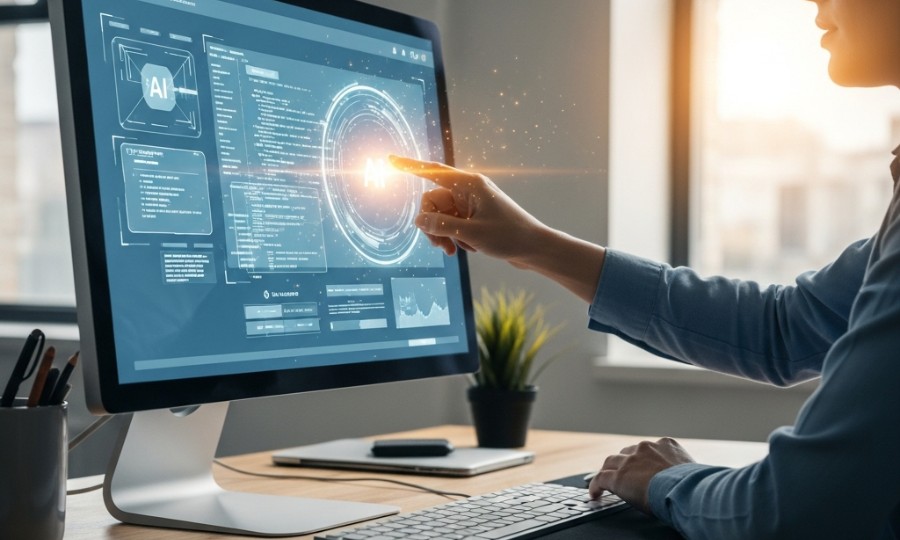
Ever felt like your website isn’t quite hitting the mark? Perhaps it’s not converting as well as you’d hoped, or maybe you’re spending endless hours tweaking layouts and content, only to find yourself back at square one. It’s a common frustration, and honestly, who hasn’t been there? The truth is, in today’s fast-paced digital landscape, standing out isn’t just about pretty pictures or catchy headlines anymore; it’s about crafting an experience that feels intuitive, personal, and utterly seamless for every visitor. And here’s the thing: generative AI is rapidly becoming the secret weapon for achieving just that.
We’re not just talking about automating simple tasks (though it does that beautifully). We’re exploring how AI-powered web design is fundamentally reshaping how we approach user experience, making websites smarter, more responsive, and incredibly engaging. Think about it: imagine a website that truly understands what your audience needs, sometimes even before they do. Sound futuristic? It’s happening right now, and if you’re not paying attention, you might just be missing out on a monumental shift.
Transforming Web Creation with Generative AI
For years, web design has relied heavily on human creativity and manual execution. While invaluable, this often meant lengthy development cycles, high costs, and a constant struggle to keep up with evolving user expectations. But what if a significant portion of that work could be intelligently assisted or even generated by a system that learns and adapts? That’s the core promise of generative AI in web design.
Generative AI, in essence, uses complex algorithms to create new content, designs, or solutions based on vast amounts of data. For us in the design world, this means AI can generate design layouts, write compelling copy, optimize image choices, and even suggest entire user flows. It’s not about replacing designers; it’s about empowering them to focus on higher-level strategy and creativity, leaving the more repetitive, data-intensive tasks to intelligent systems. A recent report by Accenture, for instance, highlighted that companies embracing AI-driven design processes are seeing significant boosts in efficiency and faster time-to-market. Isn’t that something we all want?
Consider a scenario where you’re launching a new product. Traditionally, you’d spend weeks, if not months, on design iterations for various landing pages, A/B testing every element. With generative AI, you could feed the AI your brand guidelines, product details, and target audience demographics. The system could then propose multiple, visually distinct, and data-optimized landing page designs, complete with suggested headlines and calls-to-action, all within hours. You’re not just saving time; you’re leveraging insights from millions of successful designs to inform your choices from the outset. It’s a game-changer, plain and simple.
Automating Design Tasks and Personalizing Content at Scale
One of the most immediate and impactful benefits of AI in web design is its ability to automate tasks that previously consumed considerable time and resources. We’re talking about everything from initial wireframing to responsive design adjustments and even content generation. This isn’t just about speeding things up; it’s about freeing up human designers to tackle more complex, strategic challenges that truly require a human touch.
Think about a small business owner trying to update their e-commerce site. Instead of hiring a full-time designer for every seasonal update, AI tools can analyze sales data, identify popular product categories, and even suggest new page layouts or promotional banners. For example, an AI could automatically reconfigure a product page’s layout to emphasize customer reviews if data shows that reviews significantly impact conversion for a specific product type. This kind of dynamic, data-driven optimization was once only accessible to large enterprises, but now, it’s within reach for everyone.
Beyond automation, personalization is where AI truly shines. We’ve all experienced websites that feel generic, right? But what if your website could adapt its content and layout in real-time based on a visitor’s past behavior, location, or even the device they’re using? That’s the power of AI-driven personalization. For instance, a financial services website might use AI to detect if a returning visitor has previously viewed articles on retirement planning. The AI could then dynamically adjust the homepage to feature relevant retirement calculators or even a direct link to schedule a consultation with a financial advisor. This isn’t just about making things look nice; it’s about creating an intelligent user experience that anticipates needs and guides users towards their goals, naturally increasing engagement and conversions.
Crafting Intelligent Interactions with AI-Driven Chatbots and More
User engagement often hinges on how easily and effectively visitors can interact with your website. In this realm, AI is fostering a new generation of intelligent interactions that move far beyond static forms and FAQs. We’re talking about AI-driven chatbots, voice interfaces, and even adaptive multimedia experiences that respond to user input in incredibly sophisticated ways.
Consider the modern chatbot. Gone are the days of frustrating, rigid rule-based bots that couldn’t understand anything beyond specific keywords. Today’s AI-powered chatbots, often leveraging natural language processing (NLP), can understand context, answer complex questions, guide users through processes, and even provide recommendations. Imagine a visitor on a university website, asking about specific course requirements for a master’s program. An AI chatbot could not only provide that information instantly but also suggest related scholarships, application deadlines, and even link to testimonials from current students, all while maintaining a conversational tone. This drastically reduces the burden on human support staff while providing instant gratification for users.
But it doesn’t stop at chatbots. AI is also making inroads into creating dynamic, interactive elements that enhance user journeys. For example, some retail websites are using AI to power ‘virtual try-on’ features, allowing customers to visualize products on themselves before making a purchase. While this might seem like a complex augmented reality (AR) application, the underlying AI is crucial for accurate rendering and personalized recommendations. These kinds of AI web design automation features don’t just look cool; they reduce buyer’s remorse and build confidence, strengthening the brand’s relationship with its audience. It’s about designing experiences that feel less like browsing a website and more like having a helpful, knowledgeable assistant by your side.
The Human Element: Ensuring Ethical AI and Unwavering Creativity
While the capabilities of AI in web design are truly exciting, it’s crucial to acknowledge that AI isn’t a silver bullet. We’re not advocating for a future where algorithms entirely dictate design. In fact, some might worry about the loss of human creativity, or perhaps even ethical implications surrounding data privacy. These are valid concerns, and honestly, we’d be foolish to ignore them.
The human designer’s role is evolving, not diminishing. Instead of spending hours on repetitive tasks, designers can now focus on strategy, empathy, and understanding the nuanced psychological aspects of user behavior that AI, for all its power, still struggles to grasp. They become the conductors of the AI orchestra, guiding its outputs, refining its suggestions, and ensuring the final product aligns perfectly with brand values and human needs. We still need that critical human eye to ensure designs are not just efficient but also inclusive, accessible, and genuinely inspiring.
Also, ethical considerations, especially around data privacy and algorithmic bias, are paramount. As web designers leverage AI for personalized web experiences AI-driven content, it’s essential to adhere to robust data protection regulations like CCPA in California or the spirit of GDPR globally (even if it’s an EU regulation, its principles are widely adopted). Transparency with users about data collection and usage isn’t just a legal requirement; it’s a foundation of trust. We must ensure that AI systems are trained on diverse, unbiased data sets to prevent perpetuating harmful stereotypes or inadvertently excluding user groups. It’s a continuous conversation, one where human oversight is absolutely non-negotiable.
So, where do we go from here? The integration of AI into web design isn’t just a trend; it’s a foundational shift. It’s about building smarter, more responsive, and incredibly engaging digital presences. By embracing AI, you’re not just optimizing your workflow; you’re future-proofing your digital strategy and delivering truly intelligent user experiences that resonate deeply with your audience. Don’t you think it’s time to explore how these powerful tools can elevate your next project?
Start Growing with
NYC’s AI Powered Digital Marketing Agency.
Unlock the power of AI-optimized blogs and proven strategies.
From SEO & PPC to conversion-focused design,
Internete builds the growth engine your business deserves.
