
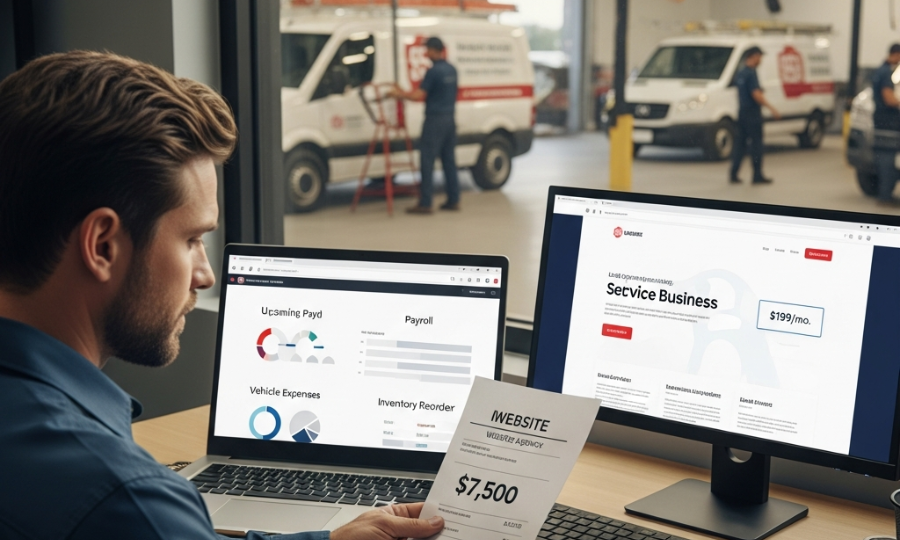
A $7,500 agency invoice hits your desk on the first of the month, right before payroll and inventory reorders clear your commercial account. For an early-stage or service-based business, that sudden liquidity drain creates immediate friction. You need digital real estate that captures leads, but tying up liquid reserves in a static asset starves your paid acquisition and operational budgets. This cash-flow tension is fueling the debate between traditional upfront project fees and Website-as-a-Service (WaaS) subscriptions.
Key Takeaways
- Traditional upfront web builds require $2,000 to $10,000+ in initial capital outlay, placing immediate pressure on early-stage liquidity.
- Website-as-a-Service packages range between $79 and $299 monthly, transforming volatile CapEx into predictable operating expenses.
- Standardized WaaS websites launch in 1 to 3 days compared to 2 to 8 weeks for custom upfront builds, speeding up lead generation.
- Upfront projects provide 100% digital asset ownership, protecting businesses from recurring vendor liabilities during sudden revenue drops.
The Capital Outlay Trap of Upfront Development
Traditional website development runs on a capital expenditure (CapEx) model. According to Omnyra in their 2026 web design pricing breakdown, upfront builds typically require initial outlays between $2,000 and $10,000 or more. You write a substantial deposit check before seeing a single design concept. Weeks later, you deliver the remaining balance upon staging deployment. That capital leaves your bank account immediately, regardless of when the site produces its first paying lead.
Also, the true cost of an upfront build rarely stops at project launch. Once the agency delivers the site files, ongoing operational maintenance shifts entirely to your shoulders. Per Leodis Digital’s 2026 web maintenance research, site owners frequently face separate unbudgeted costs for hosting, plugin licensing, and routine security updates, which typically run $20 to $80 every single month. When you want to update a headline or change a service offering, agencies bill you hourly retainers. That unpredictability wrecks annual budgeting.
How Website-as-a-Service Restructures Cash Flow
Website-as-a-Service flips the CapEx model into predictable operating expenses (OpEx). According to Mr.Site’s 2026 comparative pricing analysis, WaaS subscription packages generally range from $79 to $299 per month, often starting with zero setup fees. Instead of burning a $5,000 cash reserve on day one, you trade a large capital drain for an all-inclusive monthly expense that fits neatly into your regular overhead.
In addition, monthly packages bundle core services that traditional agencies charge for separately. That fee typically includes hosting infrastructure, daily backups, automated vulnerability patching, and regular design iterations. Per Forte Web Solutions’ 2026 industry survey, 54% of consumers and business buyers view monthly subscriptions as delivering superior cash-flow value compared to single large upfront purchases due to bundled maintenance and continuous support.
Speed to Market and Lead Capture Impact
Cash flow is not just about expenses leaving your account; it is also about how quickly your marketing brings revenue in. Traditional agency projects carry extended design and revision cycles. According to InstaWP’s 2026 development study, standardized template-based WaaS models launch within 1 to 3 days, compared to custom upfront project cycles that require 2 to 8 weeks before going live.
Every week your site sits in staging limbo is a week of missed conversions. When traffic arrives on a live page, your conversion infrastructure must work immediately. For example, solutions like Internete Chat can engage incoming visitors before they bounce, capturing leads and booking appointments around the clock. Paired with fast deployment, turning web traffic into qualified conversations weeks ahead of schedule protects your top-line revenue.
The Three-Year Total Cost of Ownership Reality
While WaaS protects working capital in months one through twelve, long-term costs tell a more nuanced story. Small businesses usually evaluate digital assets over a multi-year horizon. Here is how the numbers stack up across a full operational cycle:
- Upfront Project (Three-Year Horizon): A $6,000 initial build with $50 monthly managed hosting and periodic developer fixes amounts to roughly $7,800 over 36 months.
- WaaS Subscription (Three-Year Horizon): A $199 monthly retainer across 36 months totals $7,164, with zero surprise repair invoices.
- Full-Service Agency Retainer: Blackwell Studio’s 2026 total cost of ownership study notes that complex bespoke agency builds with high-touch retainers can push 3-year managed costs significantly higher than all-inclusive subscription models.
However, over an extended redesign cycle of 3 to 5 years, Omnyra’s analysis shows that WaaS subscriptions can become more expensive than one-time builds if a company rarely touches its content or requires structural updates. If your business model requires zero site updates after launch, continuing to pay monthly retainers eventually becomes a continuous cash drain.
Asset Ownership Versus Operational Agility
The core strategic trade-off centers on digital real estate equity. Upfront builds grant you 100% code and database ownership. As The Index Bot documented in its 2026 web pricing guide, paying upfront eliminates recurring vendor liabilities. If your business hits a sudden downturn, you can pause marketing spend without losing your digital storefront. Your site stays online on cheap hosting.
Conversely, Geary.co’s web development comparative analysis highlights that WaaS functions essentially like equipment leasing. You rent the infrastructure and ongoing developer time. If a cash crunch forces you to cancel the subscription, you risk site suspension or costly migration headaches. The operational question comes down to this: Do you need complete asset ownership today, or do you need to protect liquid capital for customer acquisition and inventory?
Which Pricing Model Fits Your P&L?
Choosing the right structure requires an honest assessment of your runway, update frequency, and working capital needs. Pick the model that aligns with your balance sheet realities:
- Choose WaaS if: You are launching a new offer, need rapid time-to-market within 72 hours, require ongoing content updates, and want to preserve liquid reserves for advertising campaigns.
- Choose Upfront Development if: You have strong cash reserves ($10,000+ unallocated), require highly customized backend database integrations, and intend to leave the core site untouched for 4+ years.
Protecting your cash flow means avoiding unnecessary upfront risk while ensuring your website actively generates qualified pipeline from day one.
This article was drafted with AI assistance. Please verify all claims and information for accuracy. The content is for informational purposes only and does not constitute professional advice.
