
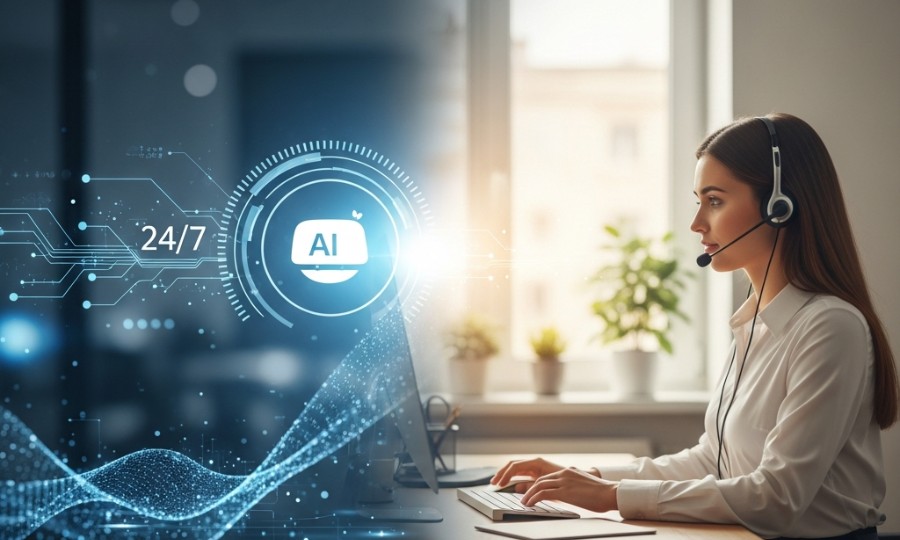
Ever felt that familiar tug-of-war between cutting-edge efficiency and the warmth of human connection? It’s a challenge many businesses face today, especially when it comes to managing customer interactions. We’re talking about the ongoing debate: 24/7 AI availability versus the irreplaceable human touch in your receptionist services. How do you find that optimal blend without sacrificing either?
The truth is, both AI and human receptionists offer incredible advantages, and understanding where each excels is key to crafting a customer experience that truly stands out. You don’t want to alienate your customers with cold automation, but you also can’t afford to miss opportunities because your team is off the clock. It’s a delicate balance, isn’t it?
The Unmatched Power of 24/7 AI Availability
Let’s be honest, the allure of an AI receptionist is strong. Imagine never missing a call, inquiry, or potential lead, no matter the hour. That’s the power of 24/7 availability. AI systems can handle an incredible volume of calls simultaneously, route inquiries efficiently, answer frequently asked questions, and even schedule appointments without needing a break. For businesses that operate across different time zones or have a global client base, this is a game-changer. Think about an e-commerce platform that gets customer service calls at 3 AM EST from someone on the West Coast or even internationally; an AI can be there, ready to assist instantly.
AI also brings a level of consistency that’s hard to match. Every interaction follows a predefined script or logic, ensuring that information is delivered accurately and uniformly. Plus, it’s incredibly scalable. If your call volume suddenly spikes, an AI receptionist doesn’t get overwhelmed; it just handles more requests. This can lead to significant cost savings on staffing, benefits, and office space, allowing you to reallocate resources to other critical areas of your business. In most cases, for routine tasks like confirming hours, providing directions, or resetting passwords, an AI is incredibly efficient and cost-effective. It’s not just about speed; it’s about reliable, tireless service.
Why the Human Touch Remains Irreplaceable
While AI offers undeniable advantages, there are situations where only a human will do. You might be thinking, “But can’t AI learn empathy?” The simple answer is, not in the same way a human can. True empathy, the ability to understand and share the feelings of another, is a uniquely human trait. When a customer is frustrated, upset, or facing a complex, sensitive issue, a human receptionist can offer genuine understanding, a calming presence, and the nuanced problem-solving skills that AI simply hasn’t mastered yet. They can pick up on subtle vocal cues, adapt their tone, and offer creative solutions that go beyond programmed responses.
Consider a medical practice where a patient is calling with a highly personal or distressing health concern. An AI might efficiently book an appointment, but a human can offer a compassionate ear, reassure them, and navigate the conversation with a level of care that builds trust. This personal connection fosters loyalty and enhances your brand’s reputation for customer service. For complex issues, those requiring critical thinking, negotiation, or a deep understanding of unique circumstances, a human’s ability to think outside the box is invaluable. We’re talking about situations where the emotional stakes are high, or the problem doesn’t fit neatly into a predetermined flowchart.
Crafting Your Hybrid Receptionist Strategy
So, if both have their strengths, how do you get the best of both worlds? The answer, for many successful businesses, lies in a hybrid model. This approach strategically deploys AI for tasks where it excels and reserves human interaction for situations that demand it. It’s about optimizing your resources and delivering a superior customer experience.
Here’s the thing: you can use AI to manage initial contact, answer FAQs, and triage calls. For instance, an AI could greet callers, verify basic information, and then seamlessly transfer them to a human when the query requires empathy, complex problem-solving, or a personalized touch. This frees up your human receptionists to focus on those high-value interactions, rather than getting bogged down with repetitive administrative tasks. Imagine your human team spending more time building relationships and less time repeating the same information about your business hours. That sounds pretty good, doesn’t it?
Real-World Scenarios: When to Go AI, Human, or Both
Let’s look at a few examples to illustrate this blend. A busy law firm, for instance, might use an AI to handle after-hours calls, gather basic client information, and schedule initial consultations. But for clients calling about sensitive legal matters, a human receptionist would step in to provide that crucial empathetic connection and detailed guidance. The AI acts as a reliable first line of defense, ensuring no potential client is missed, while the human ensures trust and rapport are built from the get-go.
Or consider a small marketing agency. They could deploy an AI to qualify inbound leads by asking a series of questions about project needs and budget, only passing truly viable prospects to a human sales team. This saves the human team countless hours chasing unqualified leads. Conversely, a boutique financial advisory firm, dealing with clients‘ life savings, might prioritize a human-first approach for all client interactions, perhaps using AI only for internal scheduling or basic information retrieval. The key is to assess your specific business needs, your customer demographic, and the nature of your interactions. What do your customers truly value most in their interactions with you?
Beyond the Buzzwords: Making the Right Choice for Your Business
Making the right choice isn’t just about following the latest trend; it’s about understanding your unique operational demands and your customers’ expectations. Start by auditing your current call volume and the types of inquiries you receive. How many are simple, repetitive questions? How many require genuine human intervention? This analysis will help you identify where AI can provide immediate value and where human agents are indispensable.
I believe that the future of receptionist services isn’t about choosing one over the other, but rather about intelligently integrating both. It’s about creating a streamlined, efficient, and empathetic customer journey that leverages technology without losing sight of the human element that truly connects us. It’s about designing a system that ensures 24/7 availability for those quick needs, while also guaranteeing a warm, understanding voice when it matters most. Are you ready to optimize your customer experience?
Start by identifying your high-volume, low-complexity tasks for AI, and your high-value, high-complexity tasks for your human team. Then, explore the various hybrid solutions available that allow for seamless handoffs. Investing in this thoughtful integration can significantly enhance customer satisfaction, boost efficiency, and ultimately drive your business forward.
This article was drafted with AI assistance. Please verify all claims and information for accuracy. The content is for informational purposes only and does not constitute professional advice.
