
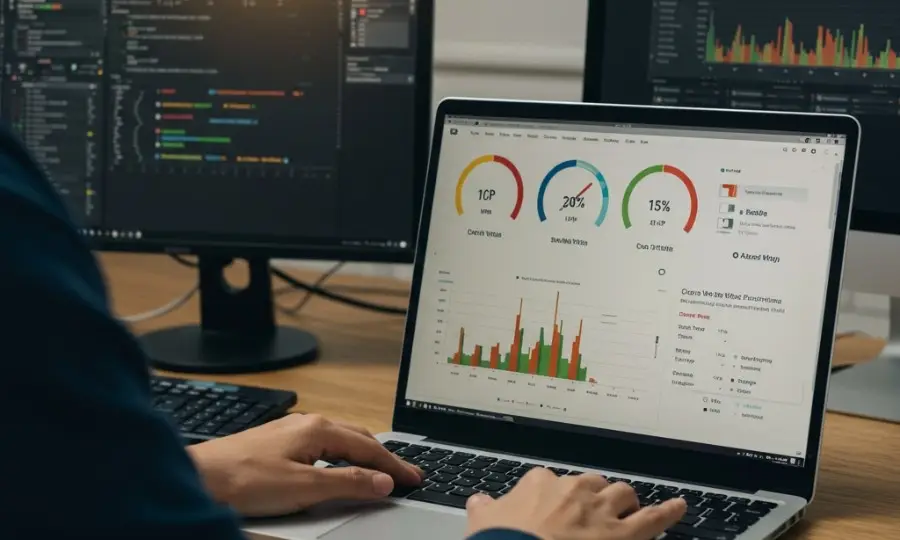
Ever found yourself waiting impatiently for a website to load, only to hit the back button in frustration? You’re not alone. In our fast-paced digital world, a slow website isn’t just an annoyance; it’s a significant barrier to user engagement, conversions, and ultimately, business growth. For 2025, mastering Core Web Vitals isn’t just good practice; it’s a non-negotiable imperative for any American business looking to thrive online.
Here’s the thing: Google, the gatekeeper of online visibility, has made it abundantly clear that user experience is paramount. Their Core Web Vitals initiative provides concrete, measurable metrics for just how good that experience is. Ignore them, and you’re essentially telling Google (and your potential customers) that your site isn’t worth their time. We know this feels like another moving target in the ever-evolving world of SEO, but understanding and optimizing for these vitals can unlock serious competitive advantages.
Why Core Web Vitals Aren’t Just a ‘Nice-to-Have’ Anymore (They’re Essential for 2025)
Core Web Vitals are a set of specific, measurable metrics that quantify key aspects of the user experience: loading, interactivity, and visual stability. Introduced as part of Google’s Page Experience update, they’ve become critical ranking factors. And while the core idea remains, Google is constantly refining what constitutes a ‘good’ experience. Most notably, Interaction to Next Paint (INP) officially replaced First Input Delay (FID) as the primary metric for responsiveness in March 2024, signaling a deeper focus on the actual user interaction throughout the page’s lifecycle. This isn’t just a technical tweak; it’s a reflection of how people truly experience your site.
Think about it: Google’s mission is to deliver the most relevant and highest-quality results to its users. If your site offers a clunky, slow, or jumpy experience, it doesn’t matter how great your content is; users will likely leave. And Google notices. Authoritative sources like Google’s own developers.google.com consistently emphasize these metrics as crucial for search performance. So, what exactly are we talking about?
Largest Contentful Paint (LCP): The First Impression that Counts
LCP measures the time it takes for the largest content element on your page (think hero image, video, or a big block of text) to become visible within the viewport. Essentially, it’s about how quickly your site appears useful to a user. A good LCP score is typically under 2.5 seconds. If your LCP is lagging, users might assume your site is broken or too slow, and they’ll bounce. You wouldn’t want to make a bad first impression in person, so why let your website do it?
For instance, consider an online fashion retailer. If their gorgeous hero banner, showcasing their latest collection, takes five seconds to load, potential customers are probably already gone. Optimizing LCP means ensuring those critical elements load swiftly, often through image compression, efficient server response times, and leveraging Content Delivery Networks (CDNs) to deliver content closer to your users.
Interaction to Next Paint (INP): Responsiveness Redefined
As mentioned, INP is the new kid on the block, replacing FID. It measures the latency of all user interactions with a page – clicks, taps, keypresses – from the moment the user initiates the action until the browser paints the next frame. A good INP score is under 200 milliseconds. This is a much more comprehensive look at responsiveness than FID ever was, which only measured the first interaction. Google understands that users engage with pages multiple times, and every interaction should feel instant.
Imagine a financial services website with an interactive loan calculator. If a user inputs their data and then experiences a noticeable delay before the calculation appears, that’s a poor INP score and a frustrating experience. Optimizing for INP often involves minimizing heavy JavaScript execution, breaking up long tasks, and ensuring third-party scripts aren’t hogging the main thread, allowing your site to respond almost instantly to user input.
Cumulative Layout Shift (CLS): Stability for a Seamless Experience
CLS measures the sum total of all unexpected layout shifts that occur during the entire lifespan of a page. Ever tried to click a button, only for it to suddenly move, causing you to click something else entirely? That’s CLS in action, and it’s incredibly annoying. A good CLS score should be under 0.1. Unexpected shifts undermine trust and create a sense of instability.
Take a news website, for example. If an article’s text constantly jumps around as late-loading advertisements or embedded videos push content up and down, it makes reading nearly impossible. To improve CLS, you’ll want to always specify dimensions for images and video elements, reserve space for dynamically injected content (like ads or embeds), and avoid inserting content above existing content without proper planning.
Practical Strategies to Boost Your Core Web Vitals for 2025
You might be thinking this all sounds very technical, and you’d be right to some extent. But how do you actually do all this? The good news is that many optimization techniques address multiple Core Web Vitals simultaneously. Here’s a look at some key strategies:
- Optimize Images and Videos: This is often the lowest-hanging fruit. Use modern formats like WebP or AVIF, compress images without sacrificing quality, implement responsive images, and lazy-load offscreen images. For videos, embed them efficiently and consider streaming services.
- Leverage Caching and CDNs: Browser caching stores elements of your site locally, speeding up return visits. A CDN (Content Delivery Network) serves content from servers geographically closer to your users, drastically reducing LCP, especially for an American audience spread across different states.
- Minimize and Defer JavaScript: JavaScript can be a major culprit for slow LCP and poor INP. Audit your scripts, remove unused code, defer non-critical JavaScript, and use techniques like tree-shaking and code-splitting.
- Improve Server Response Time: A slow server means everything else starts slow. Optimize your database queries, ensure your hosting plan can handle your traffic, and consider upgrading if necessary. Tools like Google’s PageSpeed Insights can highlight server-side issues.
- Manage Third-Party Scripts: Ads, analytics, chat widgets – these are often necessary but can significantly impact performance. Prioritize loading, defer non-critical scripts, and audit them regularly.
- Preload Critical Assets: Use
<link rel="preload">to tell browsers to fetch important resources (like fonts or critical CSS) earlier in the loading process.
In most cases, a thorough performance audit using tools like Google PageSpeed Insights, Lighthouse, or WebPageTest will give you a clear roadmap of what needs attention. Don’t feel you have to tackle everything at once; even small improvements can make a big difference.
The Tangible Benefits: Beyond Just Google Rankings
You might be thinking this is just a technical exercise for SEO, but it’s much more. While improved search rankings are a clear outcome of mastering Core Web Vitals, the ripple effects extend far beyond:
- Enhanced User Experience: A fast, stable, and responsive website is simply a joy to use. This leads to increased engagement, longer session durations, and a higher likelihood of users returning.
- Higher Conversion Rates: This is where the rubber meets the road for businesses. A smoother user journey from product viewing to checkout, or from landing page to lead form submission, directly impacts your bottom line. Research has consistently shown that even a one-second delay in page load time can lead to a significant drop in conversions. For example, a study by Akamai found that a 100-millisecond delay in website load time can hurt conversion rates by 7%. That’s real money!
- Improved Brand Perception: A well-performing website projects professionalism, reliability, and attention to detail. Conversely, a slow, buggy site can undermine trust and make your brand seem outdated or unprofessional.
- Reduced Bounce Rates: When users don’t have to wait or deal with frustrating shifts, they’re much less likely to leave your site prematurely.
I believe that focusing on these fundamentals isn’t just about chasing Google’s algorithm; it’s about putting your users first. When you build a website that genuinely serves their needs for speed and stability, both Google and your customers will reward you.
As we head into 2025, the message is clear: Core Web Vitals are no longer an optional optimization. They are foundational to your online success. Start by auditing your current performance, identifying your biggest bottlenecks, and implementing targeted improvements. Don’t wait until you see a dip in rankings or conversions; proactive optimization is the key to staying ahead. Your users, and your business, will thank you for it.
Start Growing with
NYC’s AI Powered Digital Marketing Agency.
Unlock the power of AI-optimized blogs and proven strategies.
From SEO & PPC to conversion-focused design,
Internete builds the growth engine your business deserves.
